
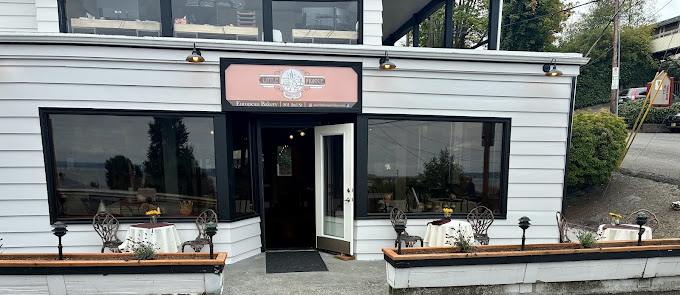
Just across our small pond, the Puget Sound. The Salish Sea. Whatever you identify our surrounding body of water as, there sits a little outpost called Mukilteo. I love hearing people attempt to pronounce it if they have never passed through. Its name comes from Lushootseed, the language of the Snohomish people and other Coast Salish tribes. Say “buckle” and add tea-o. Mukilteo.
It is our landing point when we ferry over from Clinton to the so called other side, or the mainland as some islanders prefer. Usually we pass straight through. But one particular morning, after walking my husband to a dentist appointment, I found myself with unexpected free time. That is when a brightly colored café beckoned me through its doors.
The bright pink sign against a clean white building stands out on an otherwise residential street. With its curly Art Nouveau lettering and ornate two top patio tables, Little Prague looks plucked from a European side street. You would not think you had just stepped off the ferry, but there we were.
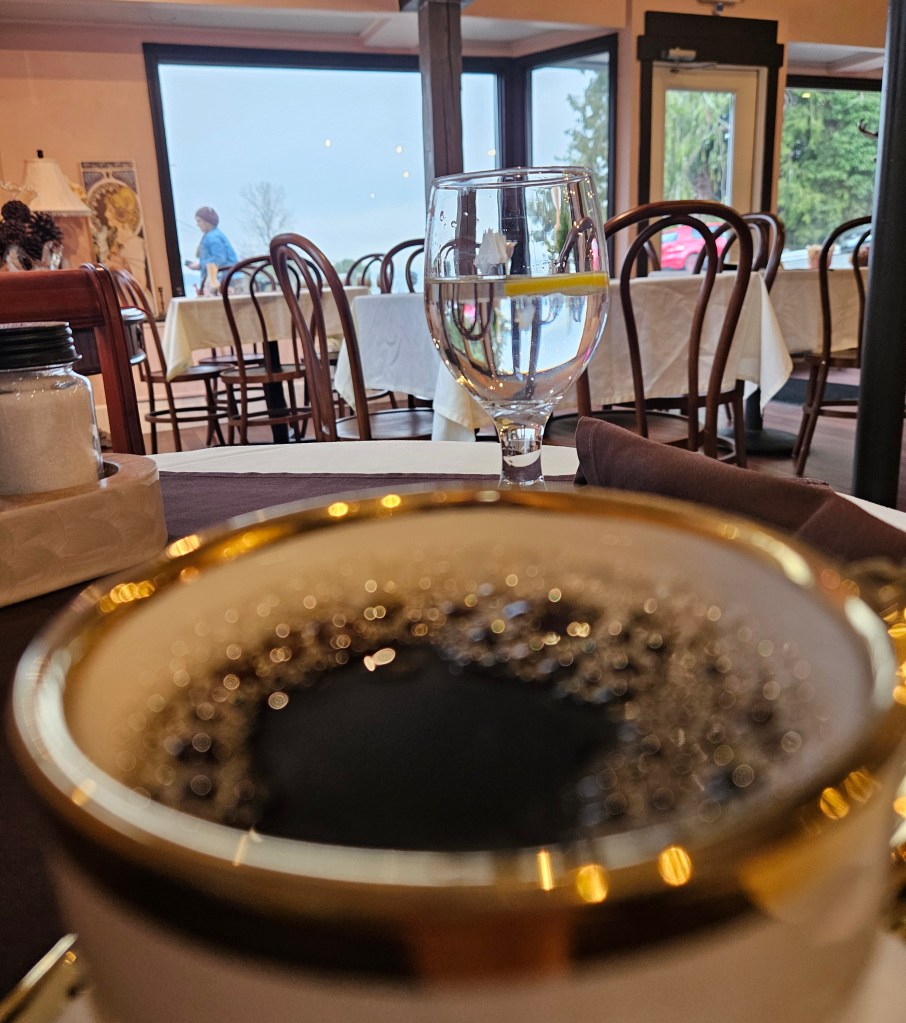
The open sign flickered on about fifteen minutes past eight, leaving me pacing the block in anticipation of a hot cup of coffee. Despite the delayed opening, I was immediately charmed by the warmth inside. Cynthia welcomed me with an ease that felt practiced and genuine. She commutes from Seattle’s Central District and has worked in the bakery world for years, maintaining a long relationship with the owners.
“They’ve been in business for years in West Seattle,” she explained. “That location is winding down as they focus more on this one between farmers market season.”
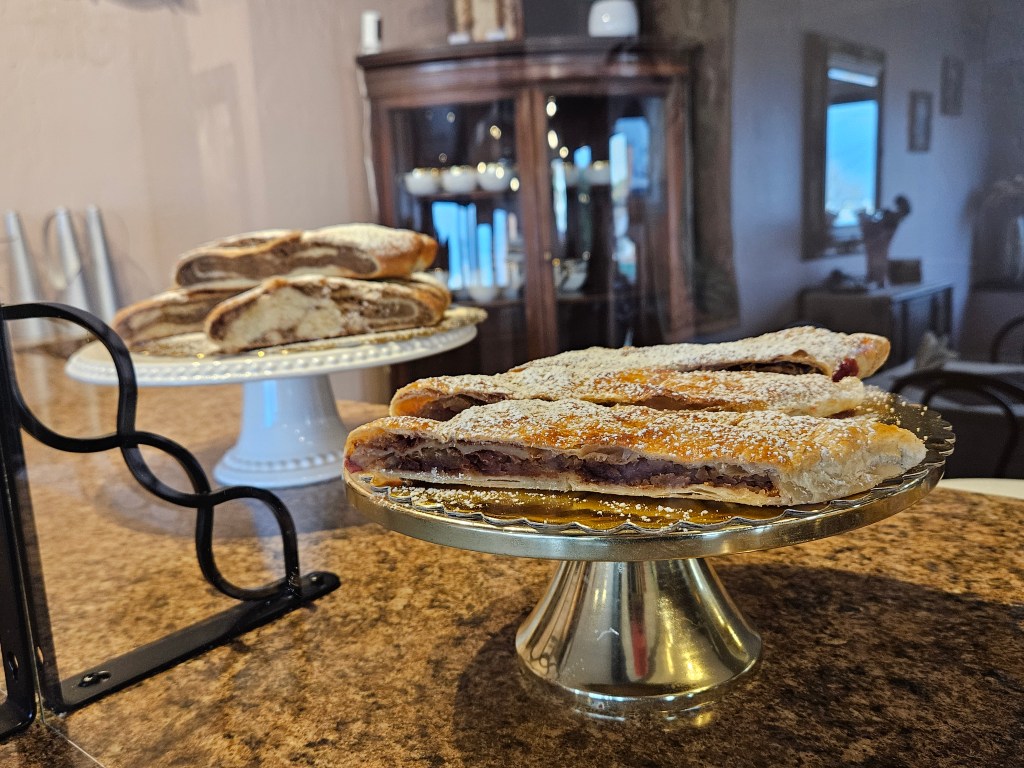
Little Prague European Bakery has been a Seattle staple since 1999. Owner Maria Makovicka built her reputation on century old Czech recipes that feel both indulgent and deeply rooted in tradition. Poppyseed strudel. Savory kolaches. Hearty Hungarian goulash. These are the flavors of the Bohemian old country, transported to the Pacific Northwest. Between farmers markets spanning King and Snohomish counties and this Mukilteo storefront, the bakery has clearly carved out its niche.
“Right now it’s mostly brunch items on the menu,” Cynthia told me. “We usually have more baked goods. The owners want to expand with more lunch options. There’s a back room that could be used for private parties or wine tastings.”
Even in transition, the space felt warm on that gray February morning near the waterfront. I settled into a small table by the window. Across from me hung an Alphonse Mucha print, a subtle nod to the region’s artistic heritage. My coffee arrived in a delicate gold rimmed mug. That detail alone felt like a quiet commitment to atmosphere.
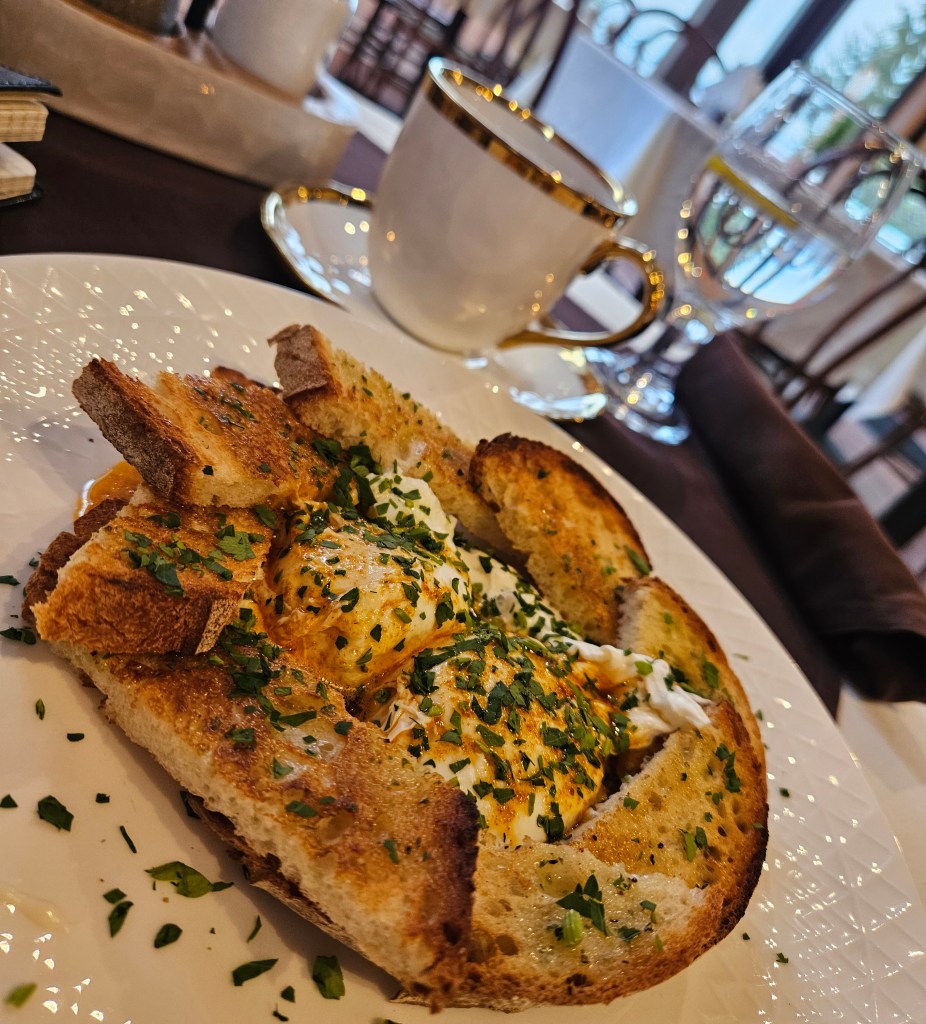
I had intended to order a kolache, but only strudels remained behind the glass case. Instead, I ventured into unfamiliar territory and ordered the Turkish eggs. What arrived was one of the most visually satisfying plates I have encountered in recent memory. Not oversized. Not excessive. Just enough. Two poached eggs rested in a bed of garlic herb yogurt, surrounded by wedges of lightly toasted crusty bread arranged like a savory wreath. When I pierced the first egg, the yolk spilled into the yogurt in a golden cascade. The toast quickly became a sponge for the sauce. It felt balanced. Intentional. Possibly one of the more authentic dishes on the menu.
There were other temptations. Fried Czech dumplings. Sweet crepes folded around fruit and cream. But the eggs felt like the right choice that morning.
As someone of Czech and Polish heritage, I am drawn to places that carry echoes of the old country. There is something grounding about recipes passed down through generations. Something comforting about flavors that predate trends.
Mukilteo is often a point of transit. A threshold between island and mainland. But perhaps it deserves more than that. If you find yourself stepping off the ferry before three in the afternoon, resist the urge to rush onward. Make the short detour. Walk toward the bright pink sign. Sit down. Order something unfamiliar.
Little Prague is not just a bakery. It is a reminder that even in the most ordinary of port towns, there are pockets of history waiting to be tasted.
 Isle Chronicles
Leave a comment