We’ve come a long way from grabbing whatever major name brand chocolate happened to be on the grocery store shelf. Usually, it comes in the form of Nestle and Hershey products. One of my favorites growing up was the Almond Joy. That sweet milk chocolate wrapped around fluffy coconut and the subtle almond lump that gives it just enough crunch is deeply satisfying. You know the one.
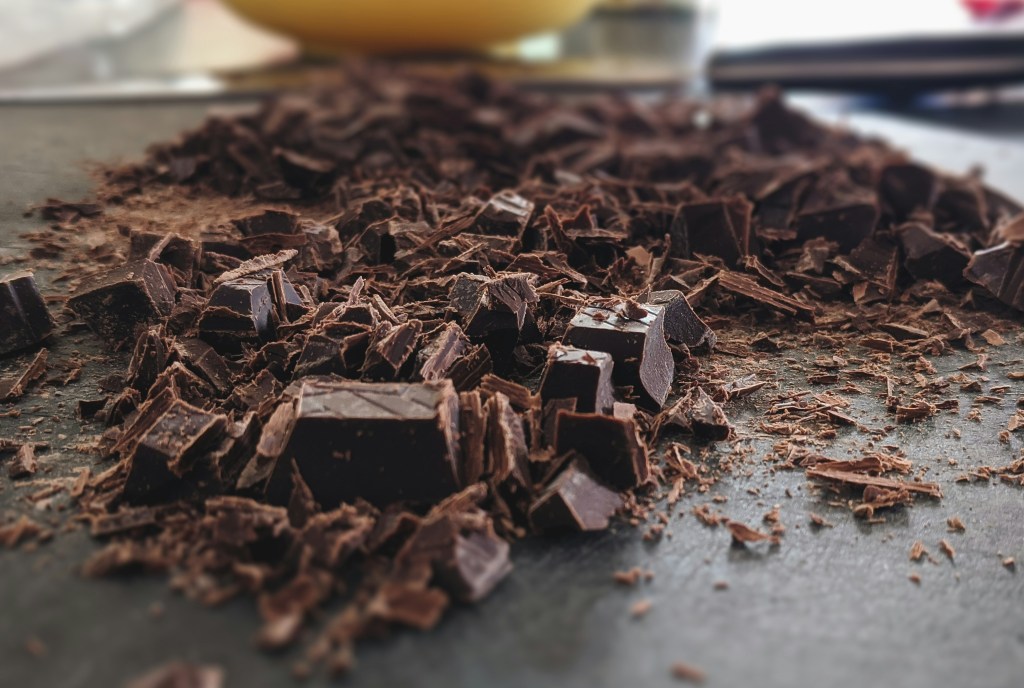
Over time, my palate shifted. As I’ve grown more sensitive (gotta love your 30s), I’ve started to wean myself off milk chocolate. Dark chocolate is more pungent the more cacao it has, which makes it a bit more nuanced. Origins, growing conditions, and flavor additions all shape the experience. Tasting chocolate can be just as intricate as wine tasting, though maybe with less pretense. I always say, “Every palate is different,” and that applies across the board.
Some people love cilantro. Others think it tastes like soap, thanks to a little genetic quirk. Chocolate works similarly. It hits everyone differently depending on memory, environment, and even mood. Recently, tasting chocolate with intention, in curated settings, has become its own kind of experience.
A brief detour into Internet chocolate culture 🙃
Now, what was going on with the Dubai chocolate craze?
I’ve stepped away from most social media, but somehow a YouTube short found me. It showed Knafeh chocolate (commonly known as Dubai Chocolate) being made from scratch. Toasted kataifi, pistachio cream and a glossy chocolate coating. It looks incredible. Suddenly the Internet was losing its mind over this imported bar, priced at around eighteen dollars for seven ounces.
Naturally, I ignored it. Until I didn’t.
Weeks later, I spotted it at Clinton Food Mart for thirteen dollars. My husband gave me endless grief for buying it, but I caved. That is the power of marketing. I do not usually jump on trends, but curiosity got me.
And it makes sense. Pistachios are expensive. The bar was dense and well made, though it lacked that fresh baked look and taste. The crunch of the toasted kataifi didn’t quite hit. [its been sitting on the shelf for who knows how long] Still, the hype cycle revealed something unsurprising. We are easily swayed by novelty, presentation, and scarcity. Meanwhile, we rarely question where our everyday chocolate comes from.
Chocolate tasting with Salinity Seafood & More
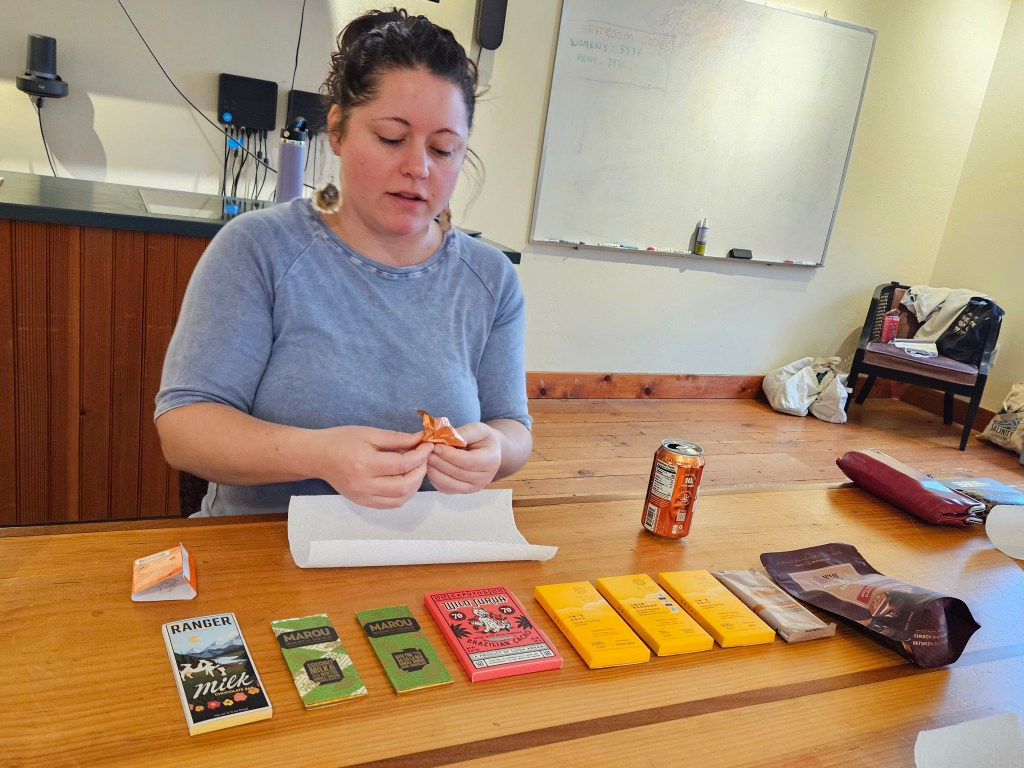
That’s where Emily Wilder comes in.
As the owner of Salinity Seafood & More in Bayview, Emily has built a business rooted in education, connection, and highlighting regional PNW makers. While her focus is oyster ecology and sustainable seafood, chocolate entered the picture in a surprising way. The overlap between global food systems and ethical sourcing opened the door to chocolate tasting workshops.
These workshops highlight fair trade, ethically sourced chocolate from around the world. And they do not shy away from educating on the darker side of the industry.
“Big Chocolate” has long been associated with exploitative labor practices, questionable sourcing, and even heavy metal contamination. It is a reality that often gets buried beneath glossy packaging and cheeky branding. Emily mentioned some chocolate brands are just specialized marketing companies, like Tony’s for example.
For a deeper dive, Emily recommends Wild Chocolate: Across the Americas in Search for Cacao’s Soul by Rowan Jacobsen, which explores cacao’s origins across Central and South America and the people who cultivate it. You can purchase the book at her shop or check it out from your local library. There is also a podcast version, if listening is more of your medium.
Our tasting, obviously, focused on the good stuff.
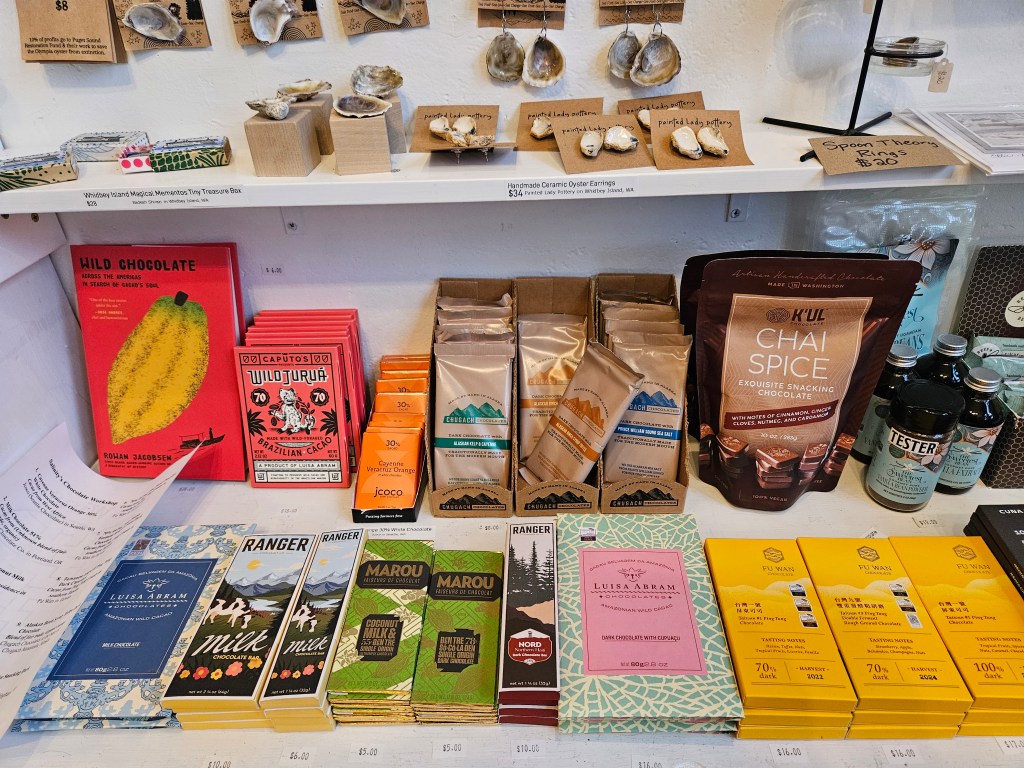
A few standouts from the tasting
Cayenne Veracruz Orange in white chocolate (30% cacao)
Bright and aromatic, this bar hits you with citrus before the first bite. Jcoco was found on the principle to pay fairly for cacao, share and indulge in supreme chocolate flavors. The cayenne Veracruz orange chocolate has a strong citrus fragrance before you even bite into it. It is the sister brand to Maeve Chocolate, formerly Seattle Chocolate Company, but leans more toward flavor pairing and tasting experiences.
Organic 51% Milk Chocolate by Ranger Chocolate Company
This is one of Portland’s first bean-to-bar chocolate maker. The factory situates itself in the Portland’s East side neighborhood where the air wafts with roasted cacao, coffee, and home-baked goods all made fresh each day. This 51% milk chocolate bar has this whole milk taste that’s unlike any mainstream bar I’ve ever had. It’s hard to describe, but it’s got this nutty flavor that matches well with the creaminess of the chocolate itself.
K’UL Chai Spice Chocolate
The bite-sized chocolate squares only come around seasonally around the holidays. This partially dark chocolate has electric spicy notes from the Chai flavor making this a pleasing post-dinner snack. Pair them with some salted hazelnuts for a flavor explosion. K’UL Chocolate is fighting what mainstream chocolate is known for: slave labor, inequality, and a myriad unethical practices. Like many of these other chocolate brands and makers pictured above, K’UL is on the mission to tell the stories behind the humans that make chocolate: Their fortitude and their connection to the plant that gives us one hell of a decadent dessert.
Across the board, these chocolates feel delicious and balanced in a way that mass-produced bars simply are not.
Chocolate is nostalgic. It pulls us back to childhood, to comfort, to small rituals of indulgence. But it is also global. It travels. It is grown, harvested, fermented, dried, shipped, melted and crafted by human hands at every stage.
So when you reach for the cheapest bar on the shelf, it is worth asking why it is so cheap. We’ve all done it. I’m guilty of being a passive consumer but lately, a little research goes a long way. As one podcast (Clotheshorse) I recently listened to put it: “It’s cheap because someone didn’t get paid.”
Trying small-batch, ethically sourced chocolate is not just about flavor. Its about participating in a system that values people as much as product.
Taste the difference
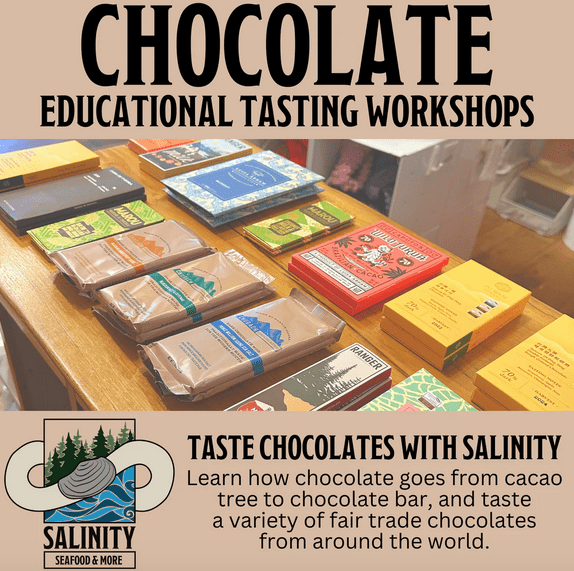
If you’re curious to explore holistically made chocolate, book a private chocolate tasting with Emily here and learn about flavor, origin and sourcing. It’s tasty education and who doesn’t love that?
In other news:
Salinity Seafood & More will host their next Oyster and Beer pairing event at Thirsty Crab Brewery on April 25th. Learn safe shucking techniques, tasting notes, and the biology of the native Olympia oyster!
For more resources on ethical chocolate companies visit:


Leave a Reply